
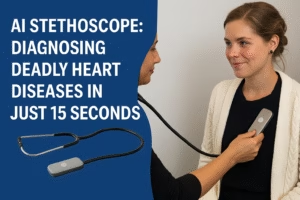
Discover how the new AI stethoscope diagnoses heart failure, atrial fibrillation, and valve disease in just 15 seconds. A revolution in healthcare.
Introduction: A Breakthrough in Heart Disease Diagnosis
Heart disease is one of the world’s leading causes of death, and early detection is critical for saving lives. Traditional diagnostic methods can be time-consuming, involving hospital visits, specialist referrals, and multiple tests. But now, a new AI stethoscope is transforming this process by detecting deadly heart conditions in just 15 seconds.
Developed by Imperial College London in partnership with Eko Health, this device has been tested in one of the largest real-world studies and is already being hailed as a game-changer in medical technology.
What is the AI Stethoscope?
Unlike a traditional stethoscope, this advanced device is about the size of a playing card and equipped with digital sensors. When placed on a patient’s chest, it records both:
- Electrocardiogram (ECG) – capturing electrical signals from the heart.
- Digital heart sounds – providing audio data for analysis.
The information is instantly uploaded to the cloud, where artificial intelligence algorithms analyze the results and send feedback to the doctor’s smartphone or computer within 15 seconds.
Conditions It Can Detect
The AI stethoscope can identify three major heart conditions:
- Heart Failure
- Atrial Fibrillation (AFib)
- Heart Valve Disease
This means patients no longer need to wait weeks for a diagnosis. Instead, doctors can spot problems almost instantly during a single consultation.
Pilot Study: Real-World Evidence
To evaluate the technology, researchers tested the device on more than 12,700 patients across 200 GP surgeries in the UK. These patients had symptoms such as breathlessness, chest tightness, or fatigue.
The results were impressive:

- Patients were 2–2.3× more likely to be diagnosed with heart failure.
- Patients were 3.5× more likely to be diagnosed with atrial fibrillation.
- Patients were 1.9–2× more likely to be diagnosed with valve disease.
This study, presented at the European Society of Cardiology Congress 2025 in Madrid, highlights the tool’s potential to significantly speed up diagnosis and treatment.
Limitations and Challenges
While the AI stethoscope shows huge promise, there are still challenges:
False Positives
One major issue is accuracy. About two-thirds of patients flagged for heart failure by the AI system were later found not to have the condition. This means the tool works best for people already showing symptoms rather than for general population screening.
Adoption by Doctors
Another challenge is usage. Surprisingly, around 70% of GP practices stopped using the device regularly after a year. Reasons included:
- Extra time needed during consultations.
- Learning curve for staff.
- Difficulty integrating the tool into existing workflows.
Why the AI Stethoscope Matters
Despite its limitations, the AI stethoscope is a major step forward in digital healthcare.
Key Benefits:
- Rapid Diagnosis – Results in seconds instead of weeks.
- Accessibility – Portable and usable even in rural areas.
- Better Outcomes – Early detection allows for timely treatment.
- Reduced Burden on Healthcare – Hospitals can focus on high-risk patients.
By acting as a first line of defense, the device could save thousands of lives each year.
The Future of AI in Healthcare
Artificial intelligence is increasingly being used to improve medical care — from analyzing X-rays and MRIs to predicting strokes and cancers. The AI stethoscope is one more example of how technology is making healthcare faster, smarter, and more efficient.
For heart disease specifically, this tool could help prevent serious emergencies such as heart attacks, strokes, and sudden cardiac arrests caused by undetected conditions like atrial fibrillation.
Conclusion
The AI stethoscope represents a revolutionary leap in the fight against heart disease. Its ability to diagnose conditions such as heart failure, atrial fibrillation, and valve disease in just 15 seconds could save countless lives and transform patient care.

While there are challenges with accuracy and adoption, the technology’s potential is undeniable. In the near future, AI stethoscopes may become as common in clinics as traditional stethoscopes — a simple device with the power to change the world of medicine.
FAQ
1. What is an AI stethoscope?
An AI stethoscope is a next-generation digital stethoscope equipped with sensors and artificial intelligence. It records heart sounds and ECG signals, analyzes them in the cloud, and provides results within seconds to detect heart conditions.
2. What heart conditions can the AI stethoscope detect?
The AI stethoscope can diagnose three major conditions: heart failure, atrial fibrillation (AFib), and heart valve disease.
3. How fast does the AI stethoscope give results?
It delivers diagnostic insights in just 15 seconds, making it one of the fastest screening tools available for heart disease detection.
4. Is the AI stethoscope accurate?
The device has shown promising results in clinical trials, but there are limitations. For example, some patients flagged for heart failure were later found not to have the condition. It works best for patients with existing symptoms, rather than healthy individuals.
5. Where was the AI stethoscope tested?
The device was tested in a large UK study involving 12,700 patients across 200 GP surgeries, and results were presented at the European Society of Cardiology Congress 2025.
6. Will the AI stethoscope replace traditional stethoscopes?
Not yet. While it offers faster and more accurate detection of certain conditions, it is best used as a supportive diagnostic tool alongside traditional methods.

Great to know the update on AI Stethoscope. Hope we will get this soon on market.