

The idea of flying above traffic jams and reaching your destination in minutes instead of hours has long sounded like science fiction. But in India, that future is getting closer than ever. Sarla Aviation, a Bengaluru-based aerospace start-up, is developing Shunya, India’s first economical flying taxi designed for urban air mobility (UAM). Unlike luxury concepts seen abroad, Shunya is built for the mass market to make flying as affordable as taking a cab.
Why India Needs Flying Taxis
Urban India is choking under congestion. Commuters in cities like Bengaluru, Mumbai, and Delhi often spend hours stuck in traffic for journeys as short as 15 kilometers. Expanding road infrastructure hasn’t solved the issue, and traditional public transport struggles to keep pace with the rising population.
This is where urban air mobility in India can play a revolutionary role. Flying taxis like Shunya eVTOL (electric vertical take-off and landing vehicle) can:
- Slash travel time from hours to minutes
- Reduce dependence on fossil fuels
- Cut traffic pollution by offering zero-emission travel
- Unlock new modes of transport for emergency services
Sarla Aviation has taken this challenge head-on by creating a vehicle that is safe, simple, affordable, and sustainable.
Shunya eVTOL: Designed for Affordability and Safety
While global eVTOL startups often aim at premium customers, Sarla Aviation is focused on mass adoption. The company calls Shunya the “world’s most economical flying taxi.”
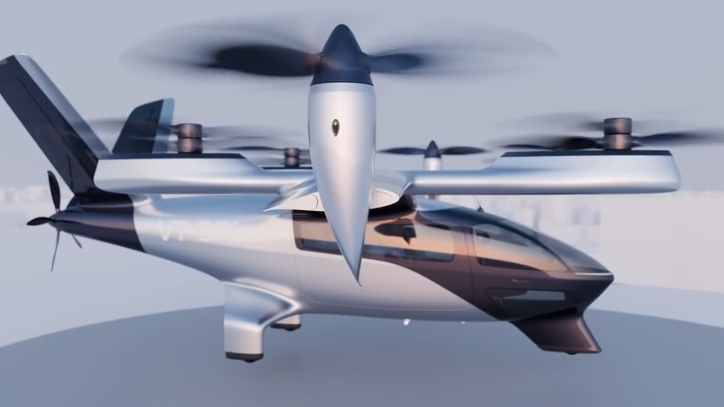
Key Technical Features
- Power System: Four double-isolated battery packs driving seven electric motors for redundancy and safety.
- Range: Up to 160 km per charge, though optimized for 20–30 km city commutes where flying taxis add the most value.
- Speed: A top speed of 250 km/h, making long commutes across Bengaluru or Mumbai possible within minutes.
- Charging: Quick 20-minute charging cycles allow continuous operations throughout the day.
By keeping design simple and efficient, Shunya minimizes moving parts, which reduces failure rates, lowers maintenance costs, and makes pricing competitive with ground-based ride-hailing.
Multiple Configurations for Real-World Use
Another advantage of Shunya is its flexible design. The aircraft is not limited to passenger services but can adapt to different urban mobility needs:

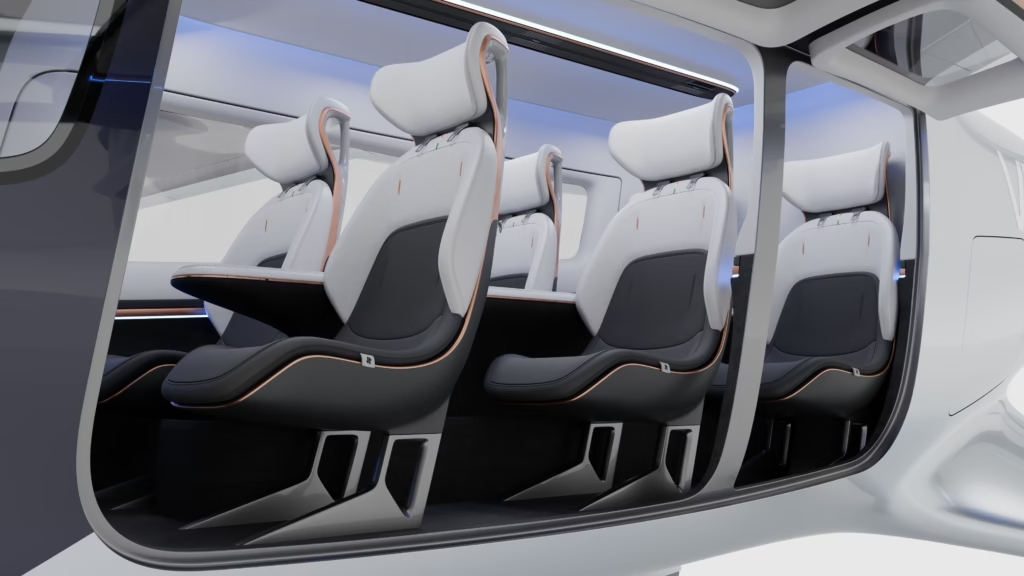
- 6-Seat Layout: The standard flying taxi configuration for everyday commuters.
- 4-Seat “Club” Mode: A premium cabin with extra space and comfort for business travellers.
- Cargo Version: A payload capacity of 680 kg with dual-side loading doors, ideal for logistics and quick deliveries.
- Ambulance Variant: A dedicated setup for rapid medical transport, providing free air ambulance services as part of Sarla’s social mission.
This versatility makes Shunya more than just a flying taxi it becomes a multi-utility aerial platform for India.
Passenger Experience: Quiet, Comfortable, and Green
Inside, Shunya aims to deliver an experience that is both comfortable and eco-friendly. The cabin is fitted with:
- Noise-managed interiors for a quiet ride
- Recycled materials such as fabrics from plastic bottles, reducing environmental footprint
- Ergonomic seating with hybrid seatbelts for maximum safety
- Convenience features like cup holders and hooks for personal items
By combining safety certification requirements with thoughtful design, Sarla Aviation is showing that sustainable aviation can still feel premium.
The Masterplan: From Bengaluru to Nationwide
Sarla Aviation has laid out a three-phase growth strategy for rolling out flying taxis in India:
- Phase One: Focus on airport transfers such as Bengaluru Airport to Electronic City, while also running 100% free medical flights to prove safety and social impact.
- Phase Two: Expand into point-to-point mobility, connecting campuses, stadiums, business districts, and residential complexes directly reducing road congestion.
- Phase Three (by 2035): Build a mass urban air mobility network with thousands of landing points, offering city-to-city and intra-city aerial connectivity at scale.
If executed successfully, this phased rollout could make flying taxis in India as common as app-based cab rides.
The Team and Inspiration
The company is named after Sarla Thakral, India’s first female pilot, symbolizing pioneering spirit and breaking barriers. Sarla Aviation’s leadership team includes aerospace veterans like Shivam Chauhan (ex-Joby Aviation), Rakesh Gaonkar, and Adrian Schmidt (ex-Lilium).
More than 30% of the team are Indian expats returning home, bringing experience from global aviation firms such as Tesla, Volocopter, Joby, and Lilium. This infusion of expertise strengthens Sarla Aviation’s vision to put India at the forefront of sustainable aviation.

Strengths and Challenges Ahead
Strengths
- Mass affordability focus instead of niche luxury
- Simple design philosophy for cost reduction and reliability
- Multiple use cases: passenger, cargo, ambulance
- Strong global talent with Indian roots
- Social mission through free emergency flights
Challenges
- Regulatory approval: Indian aviation rules must evolve for eVTOL operations
- Infrastructure: Rooftop vertiports and charging hubs will need investment
- Battery technology: Range and lifecycle need to meet demanding urban operations
- Public acceptance: Building trust in safety and reliability will be key
Despite these hurdles, Sarla Aviation’s practical approach—starting with limited, high-impact routes—gives it an edge in gradually earning public trust.
Why Shunya Matters for India
Flying taxis are not just about luxury they are about democratizing the skies. By positioning Shunya as an affordable flying taxi in India, Sarla Aviation is addressing urban challenges at scale.
If successful, the project will:
- Reduce travel stress for millions
- Support eco-friendly transportation
- Strengthen India’s aerospace innovation ecosystem
- Create jobs in design, maintenance, and air mobility services
Final Thoughts
With its bold mission, Sarla Aviation’s Shunya eVTOL is set to redefine how India moves. What once felt like a futuristic dream flying over traffic at affordable prices is now within sight.
From airport transfers in Bengaluru to nationwide flying taxi networks by 2035, Shunya is more than just a new vehicle it is a new vision of mobility, accessibility, and sustainability.
The question is no longer if flying taxis will come to India, but when. And with Sarla Aviation leading the way, the answer might be sooner than we think.

Hello neotechie.io Admin.